This blog contains accounts of my travels in India and abroad. Some of the posts were created much later, the dates have been adjusted to give a sense of the real time.

Sunday, November 30, 2014

The coach potato!


Arbitrage – it’s funded careers, it’s grown businesses, and sometimes it can just about create an engineering marvel.  The Darjeeling Himalayan railway was born out of the difference of potato prices between Siliguri and Darjeeling. Not only is the DHR an astounding feat of engineering, but well, the views aren’t too bad either, as it skirts the hills of North Bengal with the Kanchendzonga massif in the background. I had briefly seen the train in action during a visit to Darjeeling in 2010. But now, I was riding the ‘express’ with my parents.

Along Batasia loop (2010)


Up Hill cart road

Adding fuel to the fire
The train originally ran from New Jalpaiguri to Ghoom, but the route has been closed following a landslide. So I booked a more ‘touristy’ trip – one from Darjeeling to Ghoom (the highest station in India) and back. But touristy as it might sound, it was quite the novel experience as I was about to find out.
The Train runs along the hill cart road with regular traffic moving in parallel and a lot faster – yes, this is more of a slow coach in 2014 as it charges along at the speed of yesteryear with intermittent halts to cool off as the engine negotiates the curves and inclines of the hill town. However, speed doesn’t define the steam engine experience – sticking your head/or hands out of the window does as you get covered in soot – I didn’t say it was a clean experience. Luckily for me, the soot didn’t make me scary enough to ward off the friendly locals who often stop to wave you on – even if you aren’t a potato farmer. Who cares about the burning coal a few meters away, that's heart-warming enough I say!

The memorial at Batasia loop with Kanchendzonga in the background


TIPS:
  • Dont forget to visit the railway museum in Ghoom.
  • While the train stops at Batasia loop, you might want to go there separately in the early morning for good view of Kanchendzonga
  • Book early especially during tourist season – seats are few.

Sunday, March 30, 2014

Shopping in Shangri-la

Yes, you read that right – this post is all about shopping; perhaps one of my effeminate posts, even more so since this trip was done with male companions. But before you get all excited, let me assure you, Bhutan is no Dubai or Singapore or Bangkok. There are no big malls, no fancy neon lights guiding you to expense; rather it’s the simplicity and authenticity of tradition that you shop for. Make no mistake though – tourism is a big earner for Bhutan in spite of its restrictions, but people are happy, content and more importantly, belly-full, so they are unlikely to chase you around to buy anything.

THIMPHU

Murals on homes depicting deities are common 
The capital of Bhutan affirms the country’s status as the last Shangri-la. Every building reflects the local architecture - the bordered windows against the monochromatic walls, the sloped roofs, the murals of the four deities on the walls. Out on the streets, all the men are in Gho and the women in Kiras – you can get high on the uniformity. Surely, you must get the authentic stuff here!
A local couple in the traditional Gho & Kira
But before you loosen your purse strings, it might just enrichen the experience if you started from the ground up. Head to the National Institute for Zorig Chusum, a centre where local students are trained in the 13 traditional arts. Stroll around through the classrooms while instructors guide the students through wood carvings, painting, clay modelling and other arts. Yes, you are free to watch a class in session and hope that you understand body language well as the lessons are likely to be in Dzongkha. Once you’re done poking around, head to the shop where some of the students’ work is available at a relatively cheaper cost and I might add, the quality isn’t too bad either.
But, if students’ work doesn’t make the cut, head back to Norzin lam for plenty more options. At the North end of the street, Tarayana foundation – the entire range of handicrafts made by rural women and its fairly cheap – a total win-win. If you still aren’t happy, there are 2 more options. The first is a handicraft fair on one side of Norzin lam that is supposedly to go on till 2016. Some of the shops deal only in wood, others only in cloth, but within the 40 odd stalls, you will find anything you are looking for. The second are the standard handicraft shops that you are used to seeing in any tourist destination and you will find them around the clock tower on Norzin lam and on some of the parallel streets to the east.


Norzin Lam by night

Wood carving at the NI for Zorig Chusum, Thimphu

Clay modelling at the NI for Zorig Chusum, Thimphu


Kira Tip: Local cloth is usually made for Kiras and is sold on basis of ‘half kira’ or ‘full kira’ and that might cost a bit. To get cheaper cloth and on a metre basis, scout around on Norzin Lam (and on the main road in Paro) and you might just find a few. I got my mum some cloth from Dorjee Gyaltshen Tshongkhang on Norzin Lam.

PARO

Local play Kuru (darts) in Thimphu
 Paro is Bhutan’s 6th largest ‘city’, but with a population of about 5,000, its merely a village by Indian standards. Like Thimphu, it conforms to dress codes, architectural style and buildings too – a Dzong guarding over it and Stupas to line its roads. Its proximity to the International airport and Bhutan’s biggest tourist attraction, the Tiger Nest monastery, ensures that this tiny hamlet has amazing hotels. But, on the other hand, its small enough for you to get some good bargains from the locals.
Darts being sold at a shop in Paro
Most of the ‘standard’ handicraft shops are on the Thimphu-Paro highway just as you enter into Paro. At Paro, try getting a little more local. Scout for stamp and coin retailers and try sending yourself some rare stamps. The crowds are less in these handicraft shops and the owners are likely to give you a bit more time.

If you haven’t sampled Bhutanese sport, Paro gives you a great opportunity to. The Druks like taking aim – Darts and Archery are the popular sports of the region. You will often find children and youth flinging a dart or firing an arrow on some barely even, patchy piece of earth by the wayside. Replace Cricket with Darts/Archery in one of India’s small towns and you have Bhutan. You can find darts and boards being sold for a reasonable price in grocery stores here. They are sold in pairs and you can get them for as cheap as Rs. 250 a pair. 

Saturday, March 8, 2014

Carneval!

Graffiti to line the way

Dance on...

Errmmm...not in public plz...(against defecation in public 


Lights...camera....parade

Supercroc!


Towards the finale in the evening (view from the Mandovi hotel)

Viewing Tip: If you arent one to get jostled around on main road, stay at Madovi hotel for an excellent bird's eye view of the parade. Alternatively, you could just have the buffet here out on the verandah and watch!

Saturday, November 16, 2013

Something's fishy in Koggala!

He looked like a fisherman too – thin, tanned and half dressed like he was ready to jump into the water. But, he knew I was coming! Well, perhaps not me precisely, but a tourist looking for that great photo! That’s when I realised that what I thought was quite rare and offbeat, was now on the tourist circuit, thanks to some good marketing by Sri Lanka tourism and another iconic Steve McCurry photo. 

When McCurry shot the stilt fishermen in 1995 along the Weligama shores, it was a tradition on the decline – with better boats and fishing methods, fewer felt the need to sit for hours on poles to earn a living. But, what he achieved was to bring this old age tradition to the world. Sri Lanka has cashed in on it – hotels carry paintings of the stilt fisherman, you can even carry home a wooden replica of them as a memento (We did) – the fishermen of Koggala are now world famous. But, the awareness couldn’t stop what was fated. Fisherman continued to find more lucrative ways of earning their living and the authentic fishing method is on its last legs. But, here’s where the catch is (pun intended) – sometimes, the more lucrative job allows them to remain fishermen, at least for a flash!

The fishing stick made of Kitul
The fisherman who approached me spoke in English. Pointing to four more of his kind sitting on poles fairly close to the beach he said, “We are fisherman, this is our job. We have families to support and you must pay 100 rupees to each fisherman if you want a photo.” Adjusting for what was obviously not his native tongue; the intonation was still rather rude and presumptuous. I ignored him and continued towards the beach for a photo. But, a quick shout from the leader and the four fishermen clambered down the poles. It was quite the farce really! A few minutes earlier, I had paid 600 LKR to shoot 3 fishermen posing on the poles. But, then they didn’t demand money, rather requested. As I walked away, the thought that I might have already missed the bus began to sink in. It appeared that all that remained were mere mannequins; locals posing as stilt fishermen for a photo. The scoundrels!
Caught! A fisherman get his catch


It was later that evening, when we decided to drive back down towards Weligama (just for a scenic drive along the coast), when I found them – they were perched modestly on stilts (ritipanna), just the two of them. My presence didn’t seem to bother them and they continued to pick out tiny sardines from the blue waters of Koggala. As waves collapsed upon their stilts, they responded with adroitness in balance. With a whip of their kitul stick, they plucked them out with ease - their catch now gleaming in the setting sun. I spent half an hour taking shots, and not a single fisherman approached me for money, which is why I paid them when leaving. Yes, I paid them; because at the end of the day, these fishermen will go home and evaluate whether or not they should fish or perform like circus clowns. I know what I want I would like them to do, for me and for the next generation of travellers. Thanks to two strangers, I could share Steve McCurry’s reality.


TIPS
  • The fishing stick is made of wood called Kitul. The stilts are also referred to as Ritipanna and the fishing string is called thangoos.
  • Search long enough and you might just spot the real fishermen – they fish a little after sunrise and before sunset
  • Don’t miss the beautiful beach at Weligama – it is a bay so you get sunrise and sunset there
  • Go whale watching at Mirissa, a short drive from Koggala. 

Saturday, September 14, 2013

Hampi - Time travel

“I don’t think she blesses foreigners..”. The two lanky, twenty something white men had quizzical looks ingrained with disappointment. Ofcourse, for anyone watching the little play, it was quite the amusement; not that racism is funny, but I guess a racist elephant is.
Lakshmi blesses a devotee
Lakshmi, the elephant is quite the crowd puller.  Barring a few walkabout appearances, her day is primarily chained to a pillar in the southern mandapa in the main courtyard of the Virupaksha temple. Her mahout sits behind wielding a short stick which he uses to communicate with the elephant through taps.  Devotees bring fruits and other food for Lakshmi and if you hand over some money, she places her trunk on your head as a blessing. The two foreign tourists had done everything right, exactly as the Indians had – they found a coin after much digging and searching through their wallets and backpacks and handed it over; yet she stood perfectly still as if nothing had happened! The mahout then clears the confusion – “Give ten rupees”. Ofcourse! He was holding out for more and the signal hadn’t been given to the animal. Like all other experiences in India, this one too came at significant premium to foreigners.
The portal
But blessing or not, Lakshmi symbolises all that is good about the sacred centre in Hampi – the fact that it is active, alive and in use. At the heart of it all is the Virupaksha temple. Situated at the end of the defunct Hampi bazaar and at the foot of Hemakuta hill, the Virupaksha temple is a fortress! Her Gopuras pierce the skies with statues and etchings of mythological characters as her high walls demarcate the land. But pass through the main Gopura in the East and it’s like a travelling through a  portal back in time.  The first courtyard is actually quite uninspiring – it has a barren tree in the centre very much like the white tree of Gondor, a pillared hall in the corner and a ticket counter to enter the main section of the temple – except for a few priests or sadhus around, its bereft of the rituals and most of structures that make the land holy.
Priest at Virupaksha temple


The next courtyard though is buzzing– not only are people flocking to see Lakshmi, but there are the shrines which are the hub of spiritual activity. There is always something happening – the priests are either performing a puja or preparing for one – and there are multiple shrines. All of this is ofcourse amidst architecture from medieval India – the great pillared halls, the intricate carvings on pillars and ceilings alike and the paintings, some of which have been restored to their original splendour –entities for which most travellers set aside admiration time, even if they come in the guise of pilgrims. And if you still don’t find this interesting enough, the monkeys of Kishkinda are always around to remind you of Hampi’s place in the Ramayana. While they lord over Anjenadri hill, the site of the Hanuman temple on the other side of the river, their numbers are anything but sparse throughout Hampi. Wonder if they would be willing to bless the foreigners!
View of Hampi from Anjenadri hill
Virupaksha temple from Hemakuta hill

TIPS
  1. Stay near the Hampi bazaar – its gets you close to the real deal. The royal centre is photogenic but dead. However, opinion is often split on which side of the river you should stay;
    • Hampi side – No time limits, ok guesthouses, only veg food and no alcohol and close to the main attractions – good base if you want to get under the skin of Hampi.
    • Across the river (anegondi side) – Better food and dirnk, better guesthouses, but need to cross over each time – last boat at 6pm and ferries may not ply during the monsoons when the river is high.
  2. Explore Hampi on foot – it can be tiring, but it lets the place sink in
  3. Watch Lakshmi, the elephant being given a bath at 8am everyday in the Tungabhadra to the North of the Virupaksha temple.
  4. For an excellent view of Hampi, visit Anjenadri hill on the other side of the river. 

Saturday, June 1, 2013

The wild side of Bombay

Flamingos at Sewri


Sunrise at Sewri

Pink - Flamingos at the mudflats


Fewer flamingos come to the mudflats every year as their habitat gets destroyed


  1. Flamingos are typically at the mudflats from Feb to April
  2. BNHS (Bombay Natural history society) organizes a day of flamingo watching (flamingo festival) – check their website for more (http://www.bnhs.org/)
  3. The flamingos will be closer during low tide – time your visit (Sunrise makes for some nice photos)


Kanheri caves


Rooted - Banyan tree 

Vines on the way to the caves

Dried vegetation awaits the monsoons

Red neck

At the caves

Standing in Queue


Youngsters take a break after the climb - Bombay in the distance

Standing gaurd

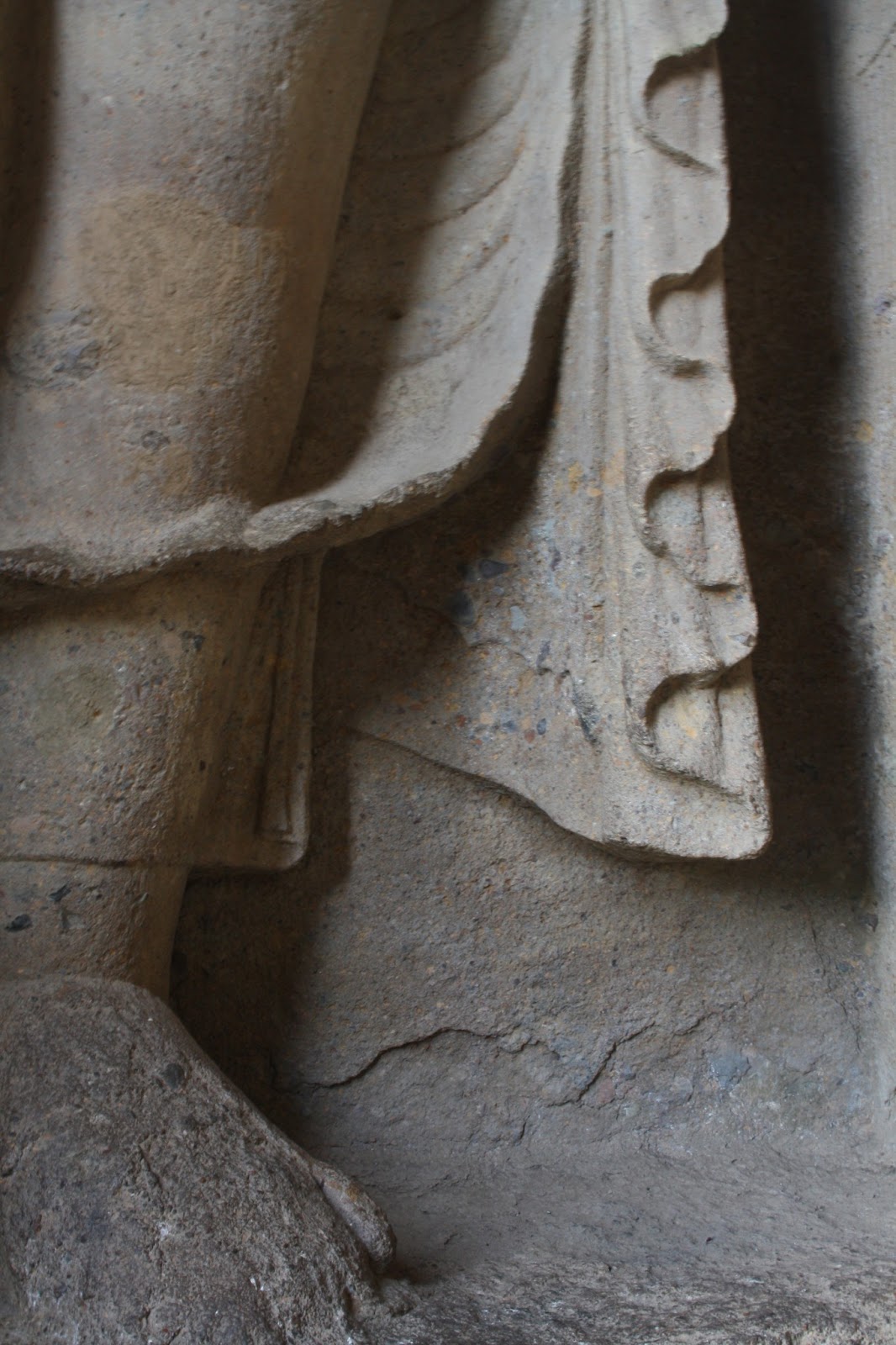
Left foot

It was a hot Saturday morning!


  1. The gates open at 7:30 am (it’s the same gate as the Sanjay Gandhi National park)
  2. The walk to the caves is 7 km and is recommended except during the summer months. There are private vans which can take you for Rs. 33/- one way. Alternatively, there is the 188 bus from Borivali station that runs on Sundays.
  3. Carry water as there are no shops along the way
  4. Beware of monkeys J

Saturday, April 13, 2013

The old guard of Malabar - A day in Kochi


A fisherman is in a pensive mood at the Chinese fishing nets
With a creak and a crank, the wooden planks see-saw upwards. Behind me the five fishermen are heaving and pulling down ropes attached to large rocks with cries of ‘hejala’. The nets rise, and with it the hopes of a catch. These are the Cheena vala, the Chinese fishing nets of Kochi in action. The eastern imports are huge spider like contraptions which are delicately balanced – lowered or raised with simple human effort. I am here for the sunrise and a few good photographs. The fishermen oblige but not without a small plea to help their cause. One of them speaks English and Hindi and explains that it’s a bad season and that they have families to support. He isn’t entirely wrong – in the past 30 mins they have lowered the nets about 4 times and not caught a single fish. In contrast, the fishermen who took their boats to deeper waters are returning with a huge catch to sell right behind the Cheena Vala. A quick look around and I notice that all the fishermen operating the nets on the beach are considerably old. Obviously this is a dying technique with no takers amongst the youth.
Hejala - the fishermen draw the nets up
The younger generation has unfortunately turned Cochin into a mini-Goa. Not that I dislike Goa, but unique is certainly superior to popular. Sample this – the previous night I headed to the Kerala café, a street restaurant near the nets. Reggae blasts from the speaker in the corner while the Malyali waiter looks a bit rasta himself. Soon he joined by a long haired Caucasian male dressed in a white lungi and white cotton shirt. The two keep thumping their fists together like they just robbed the bank of Kerala. Seated around me are North Indians who converse with the waiters in Hindi. It seems the Great South Indian guard that held my admiration for so many years is down. An assimilation into the larger Indian way you say- but like I mentioned, unique trumps popular.
Anyways, it was time for breakfast, but I wasn’t going to get any at 7:30 in the morning. Most of our enterprising Mallus are struggling into the morning. So I head back to my room to kill off an hour before I go to the Kashi Art café down the street to experience some more of the new age Kochi. As the name suggests, it’s a café-cum-art exhibition. With a nice airy Mediterranean feel to it, the Kashi Art café runs art exhibitions in its premises. Besides, the food ain’t too bad either. In fact, I soon realize that it’s pretty good as I dig into the creamy cheese filling of my omlette.  Regardless of the cosmopolitan infusion, Kochi still retains a lot of its original character, thanks to some well supported and preserved institutions by locals and government.
Murals at the river front
Mattancherry is one such example. Home to the Dutch palace and the old Jew town, it is a Malabar relic unlike any other. The Jews of Kochi, now just 8 (5 families) are an endangered lot. Jews are believed to have made their way to the Malabar Coast after the destruction of the temple of Solomon and have had a significant presence here. However, all that remains is a synagogue and remnants of the old Jew town, now filled with merchants selling all sorts of Indian art. It’s the same old clash you would witness in most tourist places in the country – the preservation of culture, of the past and of antiquity often finds itself competing with a means of survival for some. The synagogue is quite remarkable with its blue and white ceramic tiles on the floor and chandeliers above. Also remarkable is its emptiness!
Jew street
The Dutch palace is also worth a visit. It’s a museum today and is testament to the extravagance of the former rulers of Kochi. But with every step, I could feel the heat and humidity of Kochi suck the energy out of me. It was just too tiring to go through the placards on Kochi’s history and stand around to admire the murals. It was a quick 15 minute tour around the palace before going back to Fort Kochi for Lunch and some rest. I needed it – I was about to immerse myself into another dimension of the old culture.
Ethnic Indian work on sale in Jew town
Most states in the country have their own art forms and Kerala is no exception. In fact, the martial arts of Kalaripayttu and the dance of Kathakali are quite famous across the country if not the world. As the last act of the day, I head to the Kerala Kathakali centre for some martial arts and dance.  Three fighters took control of the first hour and amazed the audience with acrobatic somersaults, aerial kicks and a range of attacks and blocks with and without weapons including the Urumi which evoked some shrieks from the audience. At the end the announcer narrates a sad but familiar story – one of the dying art of Kalaripayttu. It’s not as famous as other traditional art forms and obviously not as glamorous as Kung-fu or Karate.
Kalaripayttu - fighters in action
Layers of colour
The next hour was the most interesting part of the evening – No, not the Kathakali dance, but the makeup session for the dancers that precedes it and yes, it takes an hour! For an entire sixty minutes, the dancers put on their own make-up for an audience. Everyone looked on, absolutely astounded by this exotic display, as the dancers applied layer after layer of colour. I on the other hand, wondered how two men could sit there every day for an hour and dump colour on themselves, that too in public. More importantly, traditionally, Kathakali performers were male. It’s only in recent years that female dancers have joined the troupe. So not only were they putting on make-up, one of the dancers was to play the role of a woman. Weird place this – a macho martial arts form is losing popularity, but men would rather colour themselves for an audience. If this is God’s own country, then we all came out wrong I guess. Nonetheless, it is still remarkable that locals go the distance to conserve their culture – I guess the old guard is still around.

St. Francis Church


Tips
  • There are plenty of homestays in Fort Kochi including the Vasco homestay where Vasco Da Gama is believed to have lived. They are the best budget options here. I stayed at the Oy’s homestay which was just above the Oy’s Café. However, some of them are just inns and not necessarily in a home.
  • DO NOT miss the fish in Kochi
  • St. Francis church (where Vasco Da Gama was once buried) and the Santa Cruz basilica are good examples of Indo-Portuguese architecture. They are close to each other and a visit wont take up much time.
  • The Kerala Kathakali centre is your one stop destination for all art forms of Kerala. They even have courses.
  • Close to the Jew town is a spice market, just in case you want the authentic stuff